
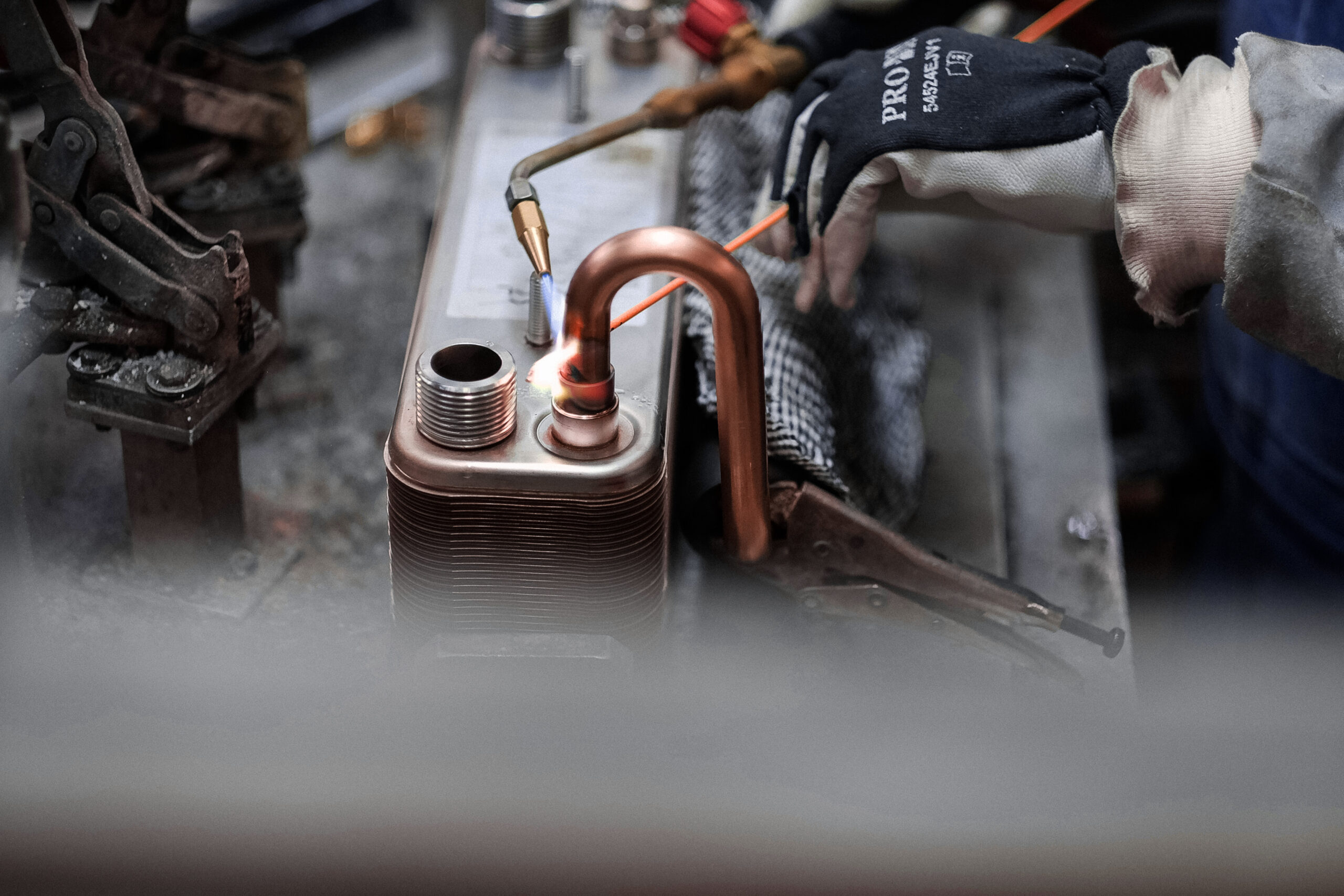

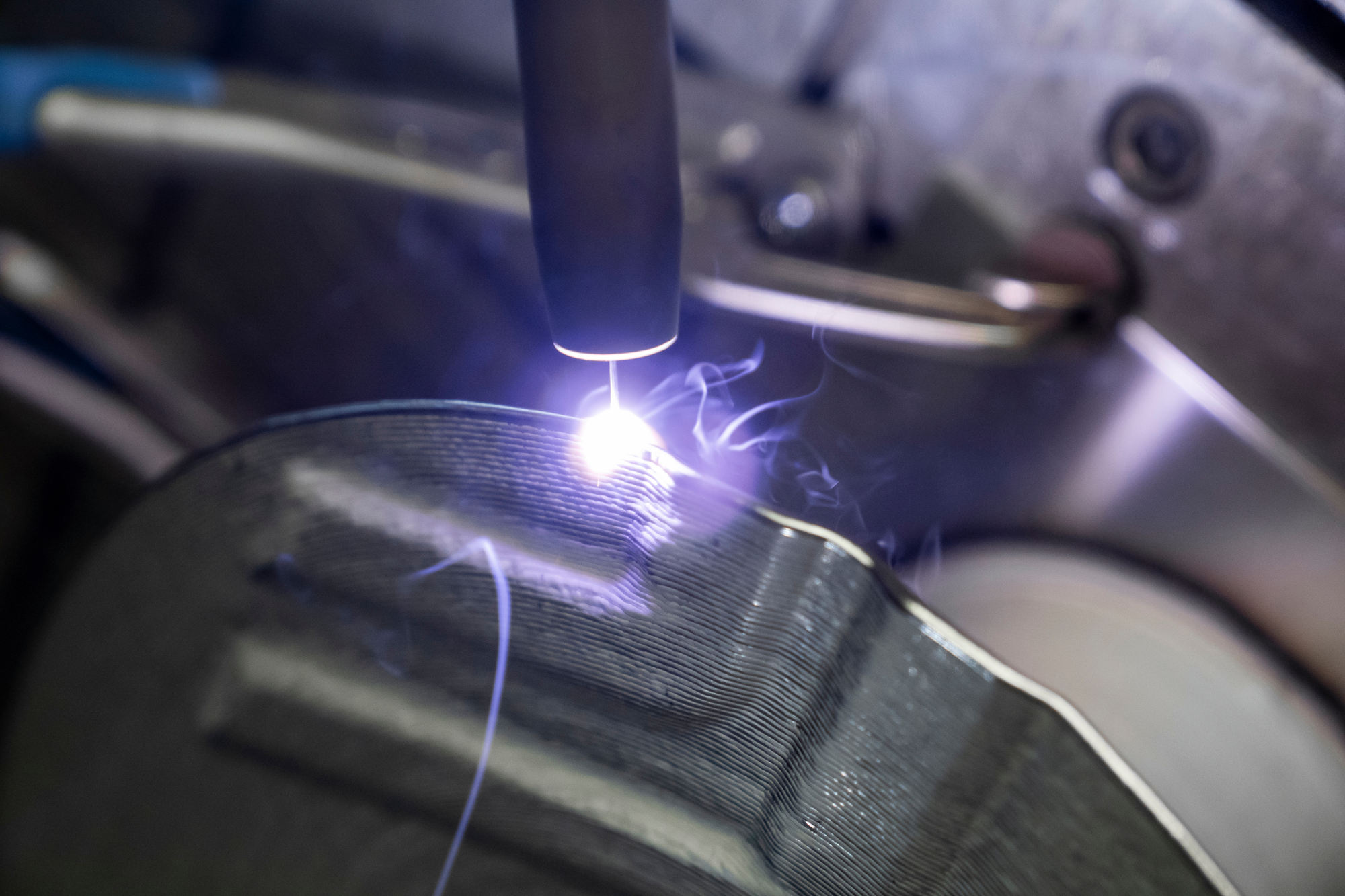

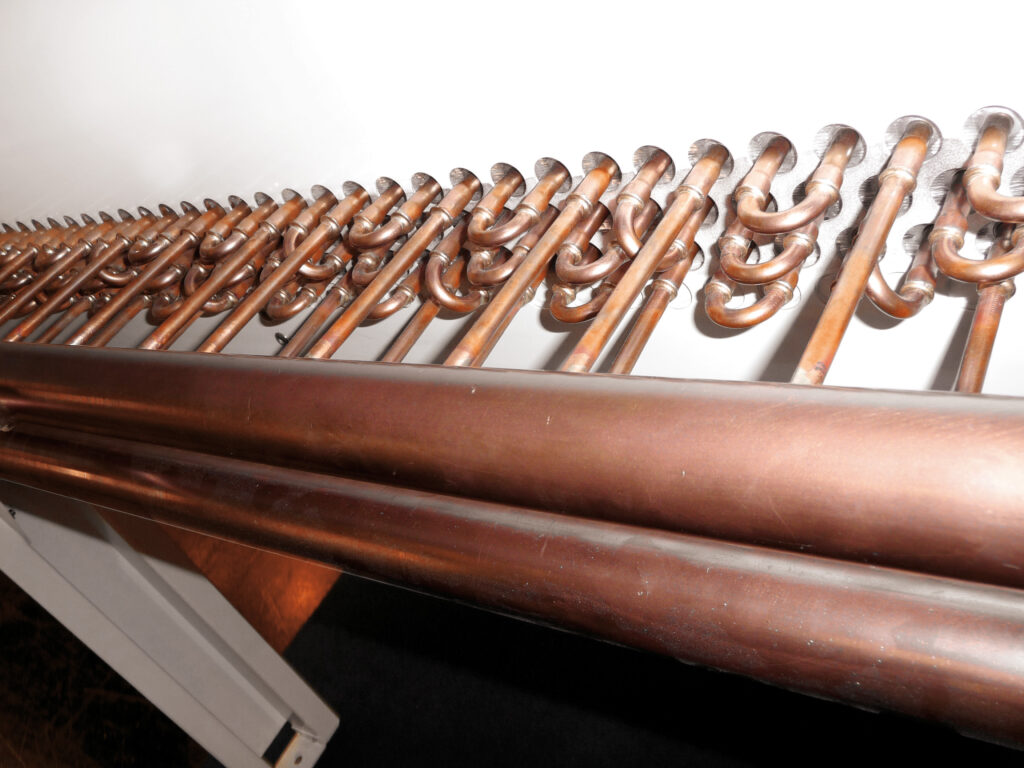
In heating, air conditioning and refrigeration installations, the quality of brazed joints is essential to ensure the leak-tightness, mechanical strength and reliability of circuits.
Whether it is a heat pump, a refrigeration circuit or a heat exchanger, choosing the filler metal and controlling the process are decisive.
Which alloys should be chosen depending on the materials to be joined? When should a flux be used? How can manual or automated brazing operations be optimized?
Discover the key selection criteria and the solutions developed by SELECTARC, the only French manufacturer of brazing filler metals.
What is the role of brazing in HVAC installations?
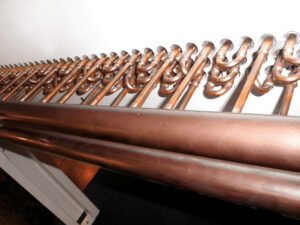
The term HVAC (Heating, Ventilation and Air Conditioning) refers to heating, ventilation and air conditioning equipment. Brazing is used in particular to join tubes, fittings and components in refrigeration circuits, heat pumps and heat exchangers.
Unlike fusion welding, brazing involves joining two materials using a molten filler metal, without melting the base materials. Through wetting and capillary action, the liquid filler metal penetrates the gap between the parts to form the joint.
Two processes are distinguished according to the liquidus temperature of the filler metal:
- Brazing, with a liquidus temperature above 450°C.
- Soldering, with a liquidus temperature of 450°C or below.
In HVAC applications, the process and alloy are selected according to the materials, service conditions and installation requirements.
For a deeper understanding of these mechanisms, consult our complete guide to industrial brazing.
How do you choose a filler metal for brazing HVAC installations?
The choice of a brazing alloy depends first and foremost on the materials to be joined and the stresses to which the joint will be subjected.
A copper-to-copper joint, a copper-to-steel assembly or a connection involving aluminium do not require the same alloys or the same application conditions.
Several criteria must be considered:
- The nature of the materials: copper, brass, steel, aluminium or dissimilar-material assemblies
- Service conditions: pressure, temperature, vibration and corrosive environments
- Joint requirements: leak-tightness, mechanical strength and durability
- Part geometry: accessibility, joint clearance and capillary conditions
- Manufacturing process: manual, mechanized or automated brazing
- Quality requirements: inspections, traceability and technical documentation
These parameters help identify a suitable alloy family before selecting a specific grade.
This information provides a practical basis for discussions with the filler metal manufacturer.
Discover the applications covered by our solutions for HVAC, plumbing and sanitary installations.
Which brazing alloys should be used for heating, refrigeration and air conditioning?
Copper-phosphorus alloys for copper-to-copper assemblies
Copper-phosphorus alloys, particularly the PHOSBRAZ range from SELECTARC, are especially suitable for copper-to-copper assemblies used in heating and refrigeration installations.
The phosphorus gives them a self-fluxing action on copper, generally making it possible to produce these assemblies without adding flux.
For copper-to-brass assemblies, using a suitable flux is generally necessary. Copper-phosphorus alloys are not recommended for steels and nickel-rich alloys, however, because of the risk of forming brittle compounds.
Silver alloys for dissimilar-material assemblies
Alloys in the BRAZARGENT range offer solutions for various assemblies, particularly copper-to-brass and copper-to-steel joints.
Their selection depends on their chemical composition, melting range, fluidity, wetting ability and the required mechanical performance.
It is essential to distinguish silver-copper-zinc alloys from copper-phosphorus-silver alloys, as their fields of application and processing precautions differ.
Specialized filler metals for brazing aluminium
Aluminium has a particularly stable oxide layer, which requires a suitable filler metal and flux.
SELECTARC offers several TBW (Tubular Brazing Wire) brazing solutions, with integrated flux:
- HARASIL NC 12 TBW, based on aluminium-silicon, intended for aluminium-to-aluminium assemblies, with a melting range of 575 to 585°C
- ZINAL 4 TBW, based on zinc-aluminium, intended in particular for certain magnesium-free aluminium assemblies with copper, steel or aluminium, with a melting range of approximately 385 to 420°C.
These two grades correspond to different temperature ranges and are not interchangeable. Their selection requires verification of the material grades, joint geometry and service conditions.
How can the quality of a brazed joint in a refrigeration circuit be guaranteed?
Even with a suitable filler metal, part preparation and heat control remain essential.
Joint quality depends in particular on surface cleanliness, the gap between the parts, heat distribution and the behaviour of the filler metal.
When flame brazing, heating must be sufficiently uniform to allow the filler metal to wet the surfaces and penetrate the joint by capillary action. Excessive or uneven heating can compromise joint quality.
When necessary, flux helps remove oxides and limit their reformation during heating. It therefore promotes wetting, but does not replace prior surface preparation.
Finally, inspections must be adapted to the installation requirements. The external appearance of the fitting alone is not enough to guarantee its leak-tightness or mechanical strength.
TBW: integrated-flux technology for brazing HVAC installations
To simplify brazing operations, SELECTARC developed and patented TBW (Tubular Brazing Wire) technology, a unique two-in-one solution that combines the filler metal and flux in a single consumable.
TBW is based on a seamless extruded metal tube filled with flux at a controlled metal-to-flux ratio, then drawn down to the desired diameter.
This design eliminates the need to apply flux separately under the operating conditions specified for the selected grade.
What are the benefits of TBW for brazing operations?
- Controlled flux dosage : the integrated flux accompanies the filler metal during brazing. Its controlled proportion helps optimize consumption and simplify workstation preparation.
- Better visibility and less cleaning : TBW technology provides better visibility during the operation and helps limit filler metal overflow. The optimized amount of flux also reduces residue and cleaning operations.
- Improved operator comfort : the absence of separate flux application limits handling and direct contact with the flux. SELECTARC documentation also highlights reduced fumes and splash risks associated with the consumable.
Suitable ventilation, extraction and protective equipment nevertheless remain essential.
- A solution suitable for manual and automated brazing: TBW can be used in manual operations as well as mechanized or automated processes. Its format and characteristics facilitate the integration of filler metal into various production configurations.
Repeatability and productivity gains must be validated on representative assemblies and under actual process conditions.
Rods, coils or rings: which brazing alloy format should you choose?
TBW technology is available in different forms to suit brazing processes:
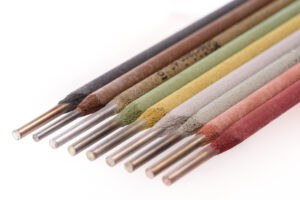
- Rods : for manual filler metal application
- Coils : for applications requiring continuous wire feed
- Rings and preforms : for pre-positioning the filler metal on the parts
The choice depends on joint geometry, accessibility, production rate and level of automation.
Melting temperatures also vary according to the formulations. For example, BRAZARGENT 5045 TBW has a melting range of 640 to 680°C, compared with 620 to 655°C for BRAZARGENT 5056 TBW.
These values correspond neither to the maximum service temperatures of the assemblies nor to universal heating settings.
Find the grades, classifications and packaging options in the TBW brazing range brochure.
SELECTARC: French manufacturer and technical partner for your HVAC assemblies
At SELECTARC, our expertise goes beyond the manufacture of filler metals.
Our industrial know-how is based in particular on our unique brazing foundry located in Roche-lez-Beaupré, in the Doubs region, as well as on our control of the main production stages, from alloy formulation to continuous casting, extrusion and wire drawing.
Our teams support professionals in selecting and optimizing their brazing solutions, taking into account materials, quality requirements and production constraints.
Our R&D laboratory can also conduct metallurgical testing and process validation in accordance with customer specifications.
This expertise is also presented in our article dedicated to SELECTARC and its HVAC brazing solutions at SIFA 2026.
Would you like to improve the reliability of your assemblies, optimize your filler metal consumption or assess the integration of TBW brazing into your production? Talk to our experts about your application.