




In many industrial sectors, equipment wear is a major issue. Crushers, conveyors, turbines, pumps, and mechanical parts are subjected to mechanical, thermal, or chemical stresses that gradually degrade their functional surfaces.
Rather than systematically replacing damaged parts, welding hardfacing is a very effective alternative used by many manufacturers. This technique consists of depositing a welding filler metal onto a substrate in order to restore or improve its properties.
Hardfacing therefore makes it possible to extend equipment service life, reduce production downtime, and lower maintenance costs.
Industrial parts are exposed to several wear mechanisms, often in combination.
The main wear mechanisms in industry
Industrial parts are exposed to several wear phenomena, often in combination.
Abrasion
Abrasion refers to the gradual loss of material caused by the friction of solid particles against a metal surface. It is common in recycling, mining, cement, and agriculture.
Erosion
Erosion occurs when abrasive particles are carried by a fluid (liquid or gas) and impact the surface of a material. This phenomenon is common in hydraulic systems, turbines, and fluid circuits.
Corrosion
Corrosion is a chemical or electrochemical degradation of metal caused by an aggressive environment.
Cavitation
Cavitation refers to the implosion of vapor bubbles in a liquid under turbulent conditions. These repeated micro-impacts can generate cracks and lead to material loss.
Surface fatigue
Repeated mechanical stress can cause microcracks that eventually weaken the surface of a part.
These wear phenomena are responsible for a large share of industrial failures, especially in highly demanding environments.
| Type of wear | Description | Industries affected | Hardfacing solutions |
| Abrasion | Wear caused by the friction of solid particles | Mining, recycling, cement, agriculture | Anti-abrasion flux-cored wires, hardfacing electrodes |
| Erosion | Impact from particles carried by a fluid | Hydraulics, turbines, pumps | Alloyed flux-cored wires, specialized MIG/MAG wires |
| Mechanical shocks | Repeated stress or impacts | Quarries, material handling, heavy industry | Impact-resistant alloys (electrodes or flux-cored wires) |
| Corrosion | Chemical attack on the metal | Chemicals, offshore, energy | Corrosion-resistant alloyed filler metals |
| Cavitation | Implosion of bubbles in a turbulent fluid | Hydraulics, turbines | Special alloys deposited by TIG or MIG |
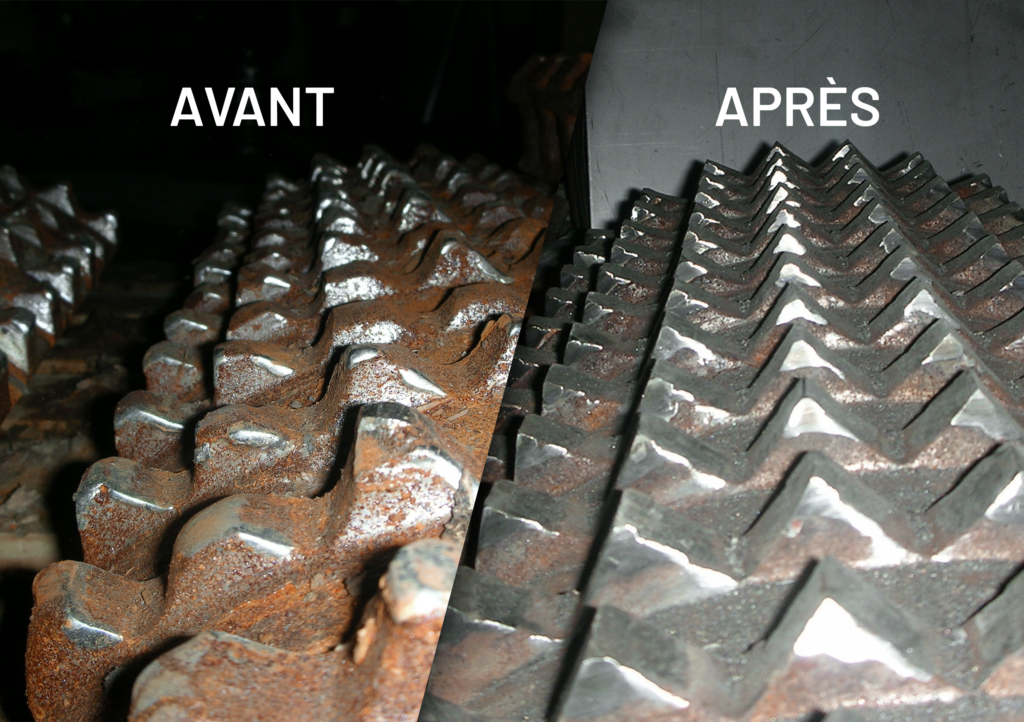
Welding hardfacing: principles and benefits for industrial maintenance
Welding hardfacing consists of depositing a layer of alloy onto a base material in order to give it properties suited to one or more types of wear.
This operation can be carried out:
- As a preventive measure, to protect a new part against wear
- As a corrective measure, to repair or rebuild a damaged surface
- Can be done in homogeneous or heterogeneous form (often heterogeneous);
Depending on the application, the deposit may aim to achieve several objectives:
- Withstand a single wear mechanism (abrasion, erosion, impact, corrosion, cavitation…)
- Withstand combined wear mechanisms (abrasion + impact, erosion + impact…)
- Restore functional dimensions
Hardfacing is therefore an effective solution for extending equipment service life and optimizing operating costs.
Welding hardfacing: a driver of industrial performance
Welding hardfacing is therefore an effective solution for manufacturers looking to:
- Extend equipment service life
- Reduce production downtime
- Improve plant reliability
- Optimize maintenance costs
By combining the appropriate welding process with the right filler metal, it becomes possible to obtain high-performance, durable metallurgical deposits.
Several welding processes can be used to carry out these hardfacing operations.
Why use weld overlay?
✔ extend the service life of equipment
✔ reduce downtime in production
✔ limit replacement costs for parts
✔ improve wear resistance
Welding processes used for hardfacing
Several welding processes can be used to carry out hardfacing operations:
- Shielded metal arc welding (MMA)
- TIG
- MIG / MAG
- Flux-cored wire
The choice depends on the application, the geometry of the part, the required level of productivity, the available resources (human and equipment), and the environment in which the hardfacing operation must be carried out.
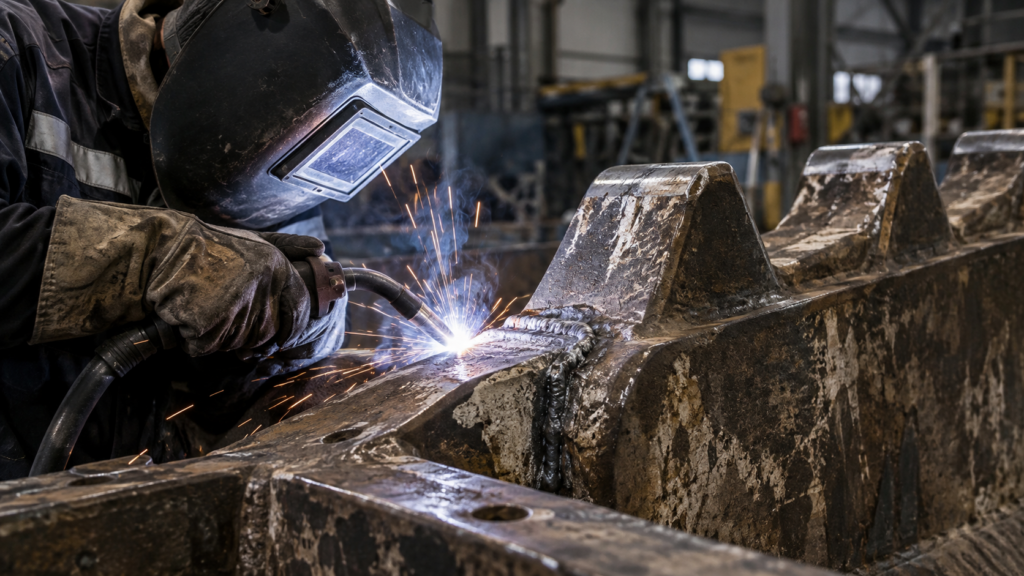
Hardfacing with a coated electrode (MMA)
The coated electrode process is still widely used in industrial maintenance.
Main advantages:
- Simple, mobile setup
- Can be used in all positions
- Robust process on site
- Wide range of hardfacing alloys
It is particularly suited to repair or on-site maintenance work.
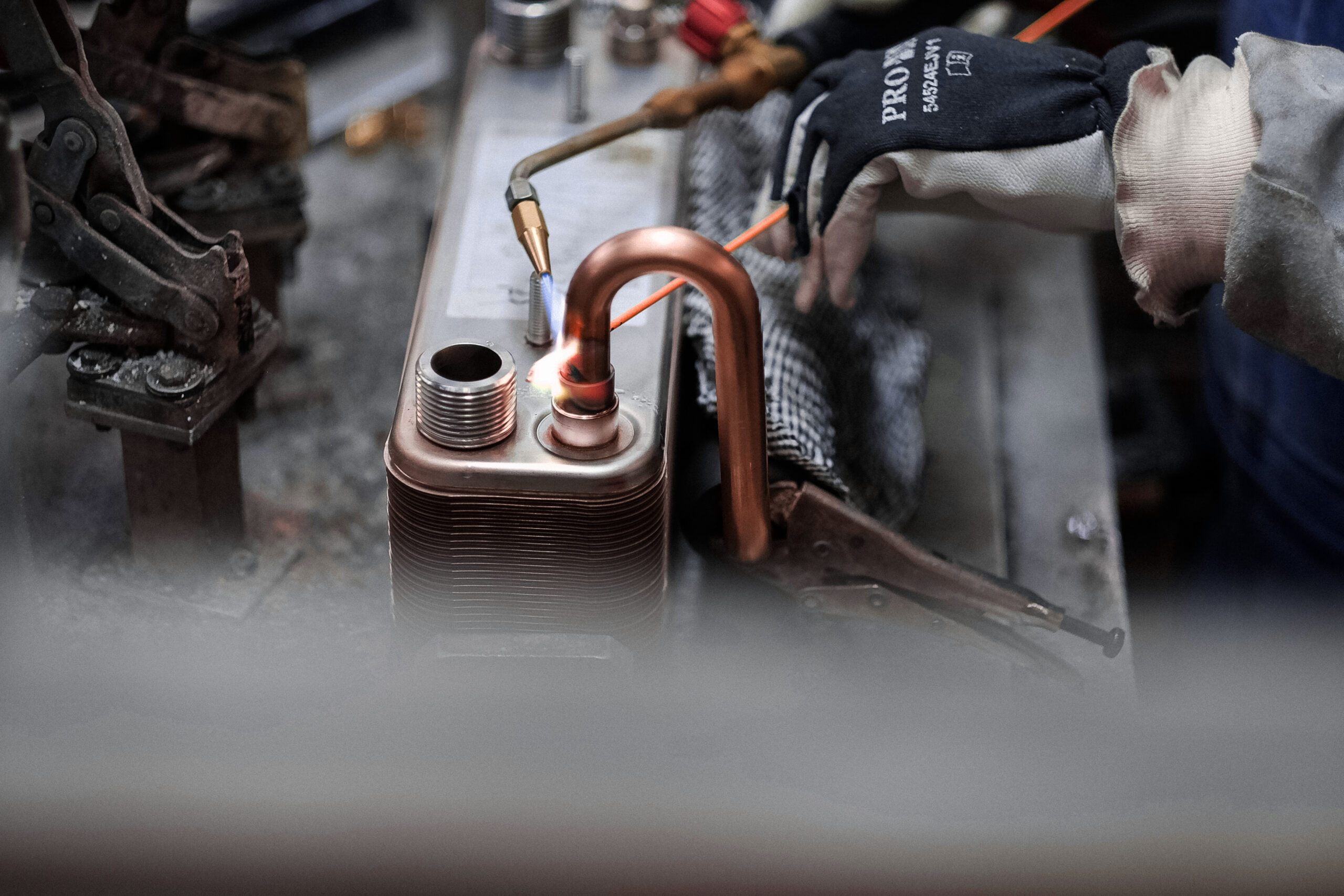
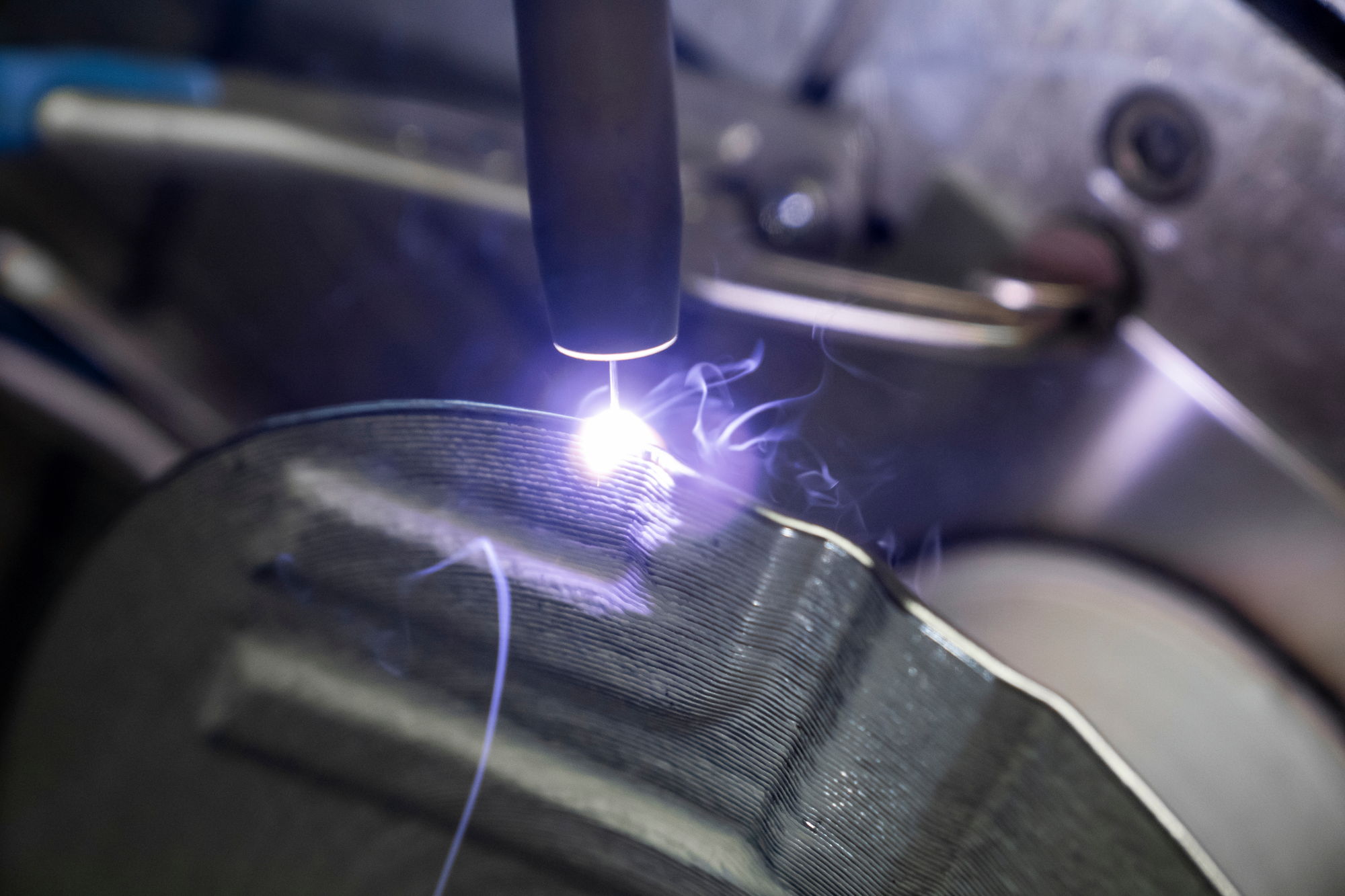
Hardfacing with TIG wire
The TIG process uses a non-consumable tungsten electrode and a filler metal in the form of a rod or wire.
Its advantages are:
- Excellent metallurgical quality of the deposit
- Very low dilution of the deposited metal
- High welding precision
- Process that can be automated
This process is often used for applications requiring high deposit quality and high added value, or for thin parts.
Hardfacing with MIG / MAG wire
The MIG/MAG process consists of striking an electric arc between the workpiece and a solid wire fed automatically in a gaseous atmosphere
Its main advantages:
- High deposition rate
- Easily automated process
- Good productivity in industrial production
It is particularly suited to hardfacing applications on large surfaces.
Hardfacing with flux-cored wire
Hardfacing flux-cored wires, tubular or folded, are now widely used in industry. They contain a flux or metal powders that make it possible to precisely adjust the composition of the deposited metal and provide superior mechanical properties.
Their main advantages:
- High deposition rate
- Excellent arc stability
- Optimized metallurgical properties
- Wide range of available alloys
- Compatible with automation and robotics
They effectively help combat abrasion, erosion, and mechanical impact phenomena.
There are two main categories of flux-cored wire: cored wires and tubular wires
- Main features of cored wire:
- Proven, flexible technology widely used in industrial environments
- Good weldability and arc stability in manual and semi-automatic welding
- High deposition rate for standard production
- Simple, robust implementation, both in the workshop and on site
- Greater sensitivity to moisture reabsorption
- Main features of tubular flux-cored wire:
- Advanced technology with optimized flux containment
- Excellent electrical conductivity and high arc stability
- Very low diffusible hydrogen content
- Optimized deposition rate, particularly suited to automation
- Less sensitive to moisture reabsorption
- No wire feeding constraints
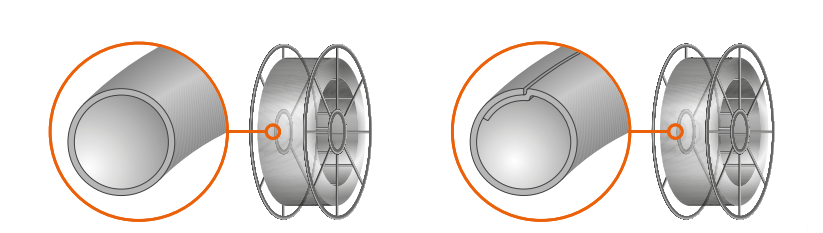
Cored wires are very often preferred for weld overlay operations over solid wires because of their wide range of options and ease of use, particularly for tubular wires.
Selectarc’s weld overlay range
A specialist in welding and brazing filler metals, Selectarc offers a complete range of welding solutions dedicated to maintenance and repair: TIG wires, MIG/MAG wires and cored wires.
These products are designed to address the various types of wear encountered in industry: severe abrasion, mechanical impact, erosion, cavitation and corrosion…
Selectarc’s metallurgical expertise enables it to develop alloys suited to the most demanding service conditions, with high hardness levels depending on the grades used.
Selectarc supports industrial companies in sustainably optimizing their maintenance, repair and weld overlay operations.
Technical expertise at the service of industrial applications
Choosing a hardfacing filler metal is not limited to selecting a product.
It requires a comprehensive analysis including:
- Identifying the type of wear
- Knowing the base material
- Service conditions
- The welding process used
Selectarc supports manufacturers in this process thanks to:
- Its metallurgical expertise
- Its dedicated R&D laboratory for testing and characterization
- Technical support in choosing filler metals
This approach makes it possible to identify the most suitable solution to improve equipment durability and secure maintenance operations.
👉 Learn more: